The Story
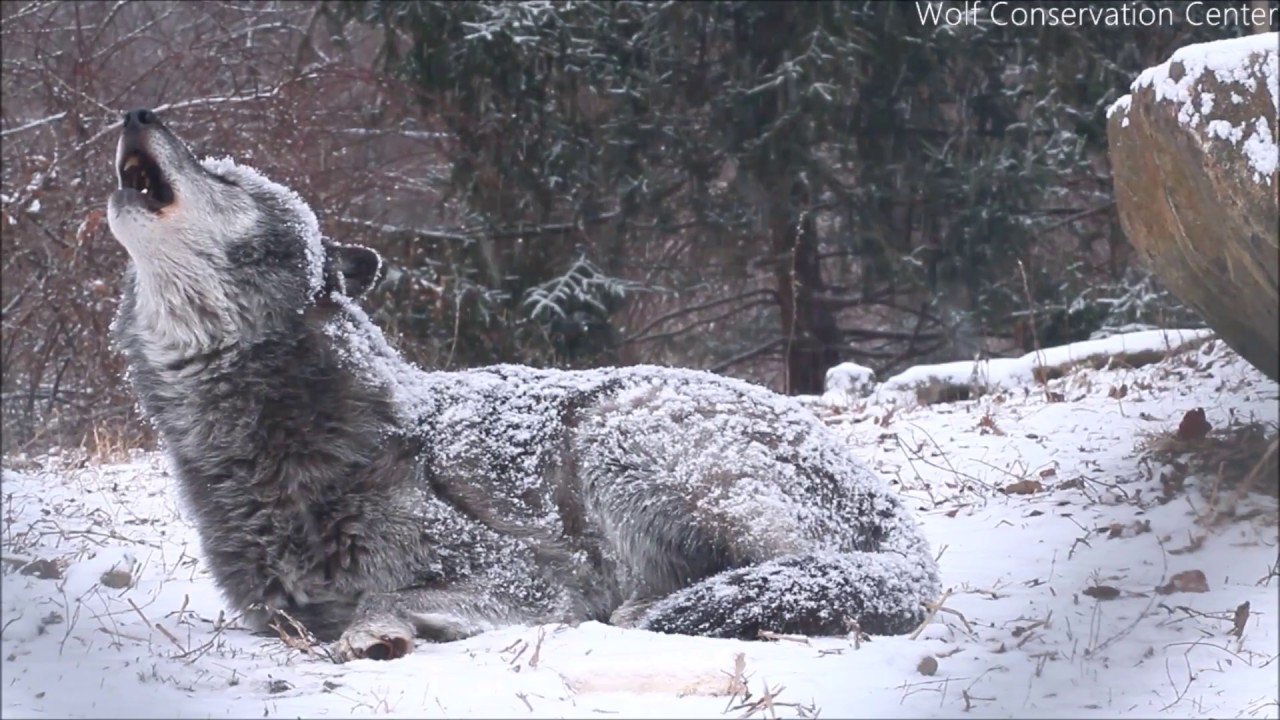
Zephyr tips his muzzle to the sky, opens his jaws and howls. He is a gray wolf lying in the snow at the Wolf Conservation Center in South Salem, New York, and the snow has settled on him too.
It powders his head, his shoulders and the long grizzled back. His throat shows pale under the gray. The call runs on, and somewhere off camera a second wolf takes it up. For a few seconds the two voices overlap and blend, one close, one out of sight.
Zephyr was born in captivity and, when this was filmed, was one of the center's four ambassador wolves, so this is no wild pack on patrol. The howl, though, is the genuine article. It is the wolves' long-distance call, and it can be heard about 6.6 miles away in forest and 9.6 miles in open country. Among its uses, a defensive howl keeps the pack together and strangers away, and a social howl helps wolves locate one another and rally.
Which of those Zephyr means cannot be read from this clip alone. What the clip does show is the basic exchange: one wolf calls, another answers from somewhere unseen. In the wild, a pack is a family group, a breeding pair with their pups, perhaps last year's young and sometimes older wolves. Packs defend their territory by howling and by scent-marking with urine.
The winter detail rewards a second look. The snow sits on top of his coat. Beneath the outer guard hairs is a dense undercoat that wolves grow in fall and shed by July. The head carries the marks that set a wolf apart from a coyote: short, rounded ears and a big, blocky muzzle, here aimed straight up.
Wolves are mainly nocturnal, and their movements usually happen at night. This call comes in daylight, from a wolf settled in the snow with flakes collecting on his back. His only chorus is the one wolf who answers out of sight.