The Story
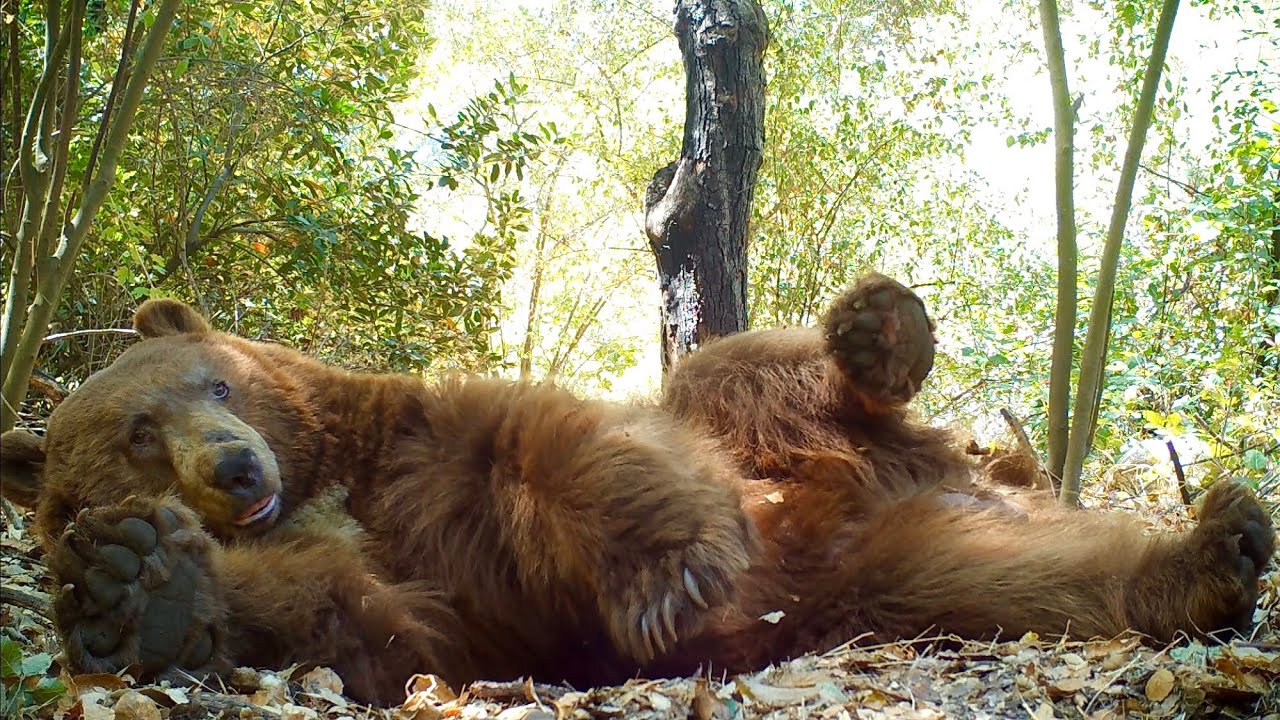
Wilford is digging a bed, and he has picked a spot right in front of the camera. On the morning of July 6, 2022, in the Angeles National Forest, this cinnamon-brown American black bear is about to lie down for a long time.
The result is not much to look at, which is normal. Black bears bed in forest, usually in a simple shallow depression in the leaf litter, and Wilford's bed is exactly that: a bear-sized hollow in dry leaves. He settles into it, rolls onto his back and stays.
He stays four hours. A front paw hangs in the air with no job to do. A hind leg goes up against a slim trunk. There are yawns and long stretches, and at one point the whole animal rolls to one side and settles again, an arm's length from the lens by the look of it, with the soles of his feet on full display. Few subjects have ever been this easy to photograph.
All that time at ground level makes a fine study in field marks. The muzzle is pale against the darker body, the usual pattern for this species. The ears stand tall and rounded, the face lacks a grizzly's concave profile, and no heavy hump rises behind the neck. A healed scar marks the bridge of his nose. The coat proves nothing either way, because black bears come in black, cinnamon, blonde, blue-gray and even white, and western populations are more often brown, cinnamon or blonde.
None of this was pure luck. The filmer expected him at this spot. A year earlier the same filmer found one of Wilford's beds the day after he had used it, and began hoping to catch him bedding down on camera.
That first bed was empty. This one has its owner in it, and he is in no hurry to leave.