My Crittercam
My Crittercam › Elk

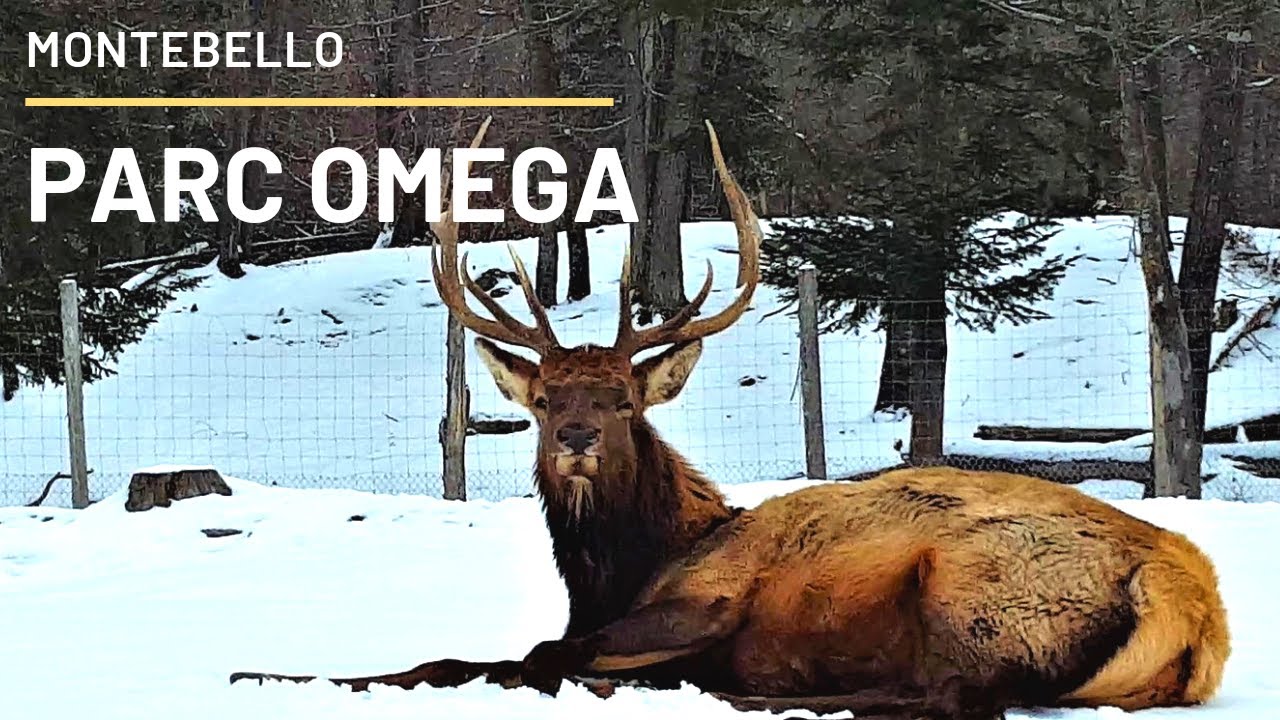
A bull elk rests in the snow, antlers high

A bull elk with tall branching antlers and a shaggy dark brown mane lies in snow facing the camera, a wire fence and trees behind him, the word OMEGA in white under a yellow line near the top.

Footage: Life Home and Garden with Ana Rica · 11:39 · uploaded January 2, 2022
Written by My Crittercam · published November 6, 2026

The Story

The bull elk does not bother to stand. He lies folded in the snow at Parc Omega, a fenced drive-through wildlife park in Montebello, Quebec, and stares back at the lens over a tall rack of antlers.

This is a captive animal, living behind wire in a park that visitors tour from their own vehicles. Deer-family animals walk up to the car, some of them antlered, and stand at the roadside or square in the middle of it; a crowd of wild boar feeds on something on the ground, a pack of wolves gathers, and a bison comes right to the window. This bull stays down in the snow, head up, and watches the car instead.

The field marks name him. A dark brown mane hangs shaggy from neck to chest, as it does on both sexes in winter, though it runs longer on bulls than on cows. His head and legs are darker than the body, which wears the light brown of an elk's winter coat. That coat is built of hollow hairs that trap air for insulation. The antlers climb in long curved beams set with tines; a mature bull's generally carry five off the main branch, six points in all. His are still on. The largest bulls begin dropping theirs in late February, younger ones as late as April or early May.

Lying down by day is ordinary elk behavior. They feed in the early morning and late evening, then rest and chew cud through the day and the middle of the night. In winter wild elk browse shrubs, aspen bark and conifers and can plow through deep snow, and many herds move down from high summer range to lower ground, though some populations stay put. Their wild range is western North America, from the Rocky Mountains to the Pacific coast and western Canada, with reintroduced herds in the East such as Great Smoky Mountains National Park. This bull sees the season out in Quebec, inside a fence.
Field Guide

A captive bull elk lies in the snow at Parc Omega in Montebello, Quebec, resting by day with his antlers still on and his winter mane hanging shaggy. Full field guide for the Elk

Common nameElk
Scientific nameCervus canadensis
FamilyCervidae (Deer family)
SizeBulls about 5 feet at the shoulder and about 8 feet nose to tail; cows about 4 1/2 feet tall and about 6 feet long.National Park Service · Animal Diversity Web, University of Michigan
WeightLarge bulls can weigh 700-1000 pounds (up to 1,100 in the rut); cows around 300-500 pounds. Calves about 30 pounds at birth.National Park Service · National Park Service · Animal Diversity Web, University of Michigan
Active whenFeeds in the early morning and late evening; rests and chews cud during the day and the middle of the night.Animal Diversity Web, University of Michigan
DietGrasses, sedges, forbs and shrubs (especially willow and serviceberry); in winter, shrubs, aspen bark and conifers. About 20 pounds of vegetation a day.Montana Natural Heritage Program and Montana Fish, Wildlife & Parks · National Park Service · National Park Service · Washington Department of Fish and Wildlife
RangeWestern North America (Rocky Mountains to the Pacific coast and western Canada), with reintroduced herds in the East such as Great Smoky Mountains National Park.Animal Diversity Web, University of Michigan · Washington Department of Fish and Wildlife · National Park Service
Lifespan10-13 years in the wild; Yellowstone's northern range elk regularly live to about 18 years.National Park Service · National Park Service
Conservation statusIUCN Red List: Least Concern. NatureServe: G4 (Apparently Secure); N5 in Canada, N4 in the US.NatureServe Explorer
Cam notes · Camerahandheld, from a vehicle
Cam notes · Time of dayday
Cam notes · Seasonwinter
Cam notes · PlaceParc Omega, Montebello, Quebec

Habitat

Behavior

Questions

How big is an elk?

Large bulls can weigh 700-1000 pounds and stand about five feet at the shoulder, while cows weigh around 300-500 pounds. A typical healthy bull's antlers are 55-60 inches long and weigh about 30 pounds a pair.National Park Service · National Park Service

When do elk drop their antlers?

The biggest bulls start shedding in late February, younger bulls as late as April or early May. New antlers grow in velvet through spring and summer.Washington Department of Fish and Wildlife

Are elk dangerous to people?

Yes, especially at two times of year: bulls in the rut will charge people and vehicles, and cows with calves may run at you or kick. Jasper National Park warns that elk can attack without warning and says not to approach them in any season.National Park Service · National Park Service · Parks Canada

Latest clips