The Story
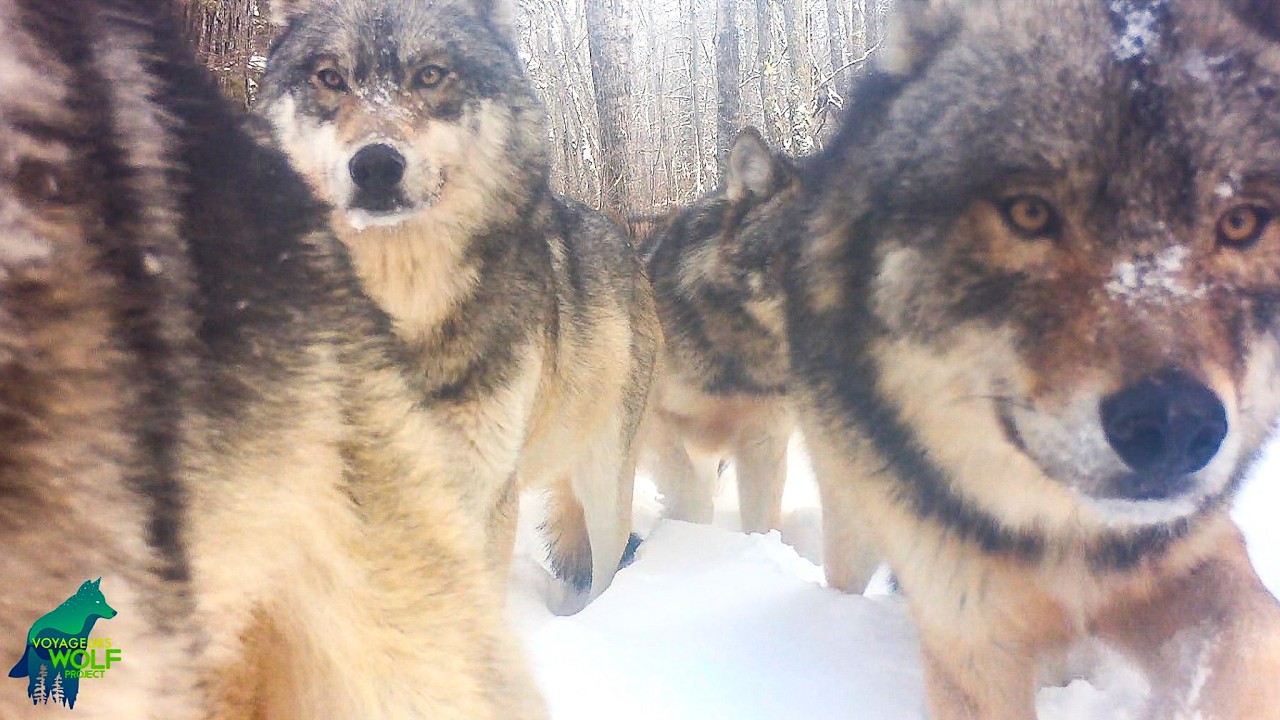
A gray wolf fills the lens, snow caked on its brow and muzzle, its nose almost on the glass. Behind it, more wolves of the Blackstone Pack stand in the snow and wait their turn.
The Voyageurs Wolf Project, whose cameras these are, puts it plainly: the Blackstone Pack really liked their cameras this winter. Wolf after wolf steps up to the trail camera to sniff it, nose it and lick the lens, until the frame is mostly fur, tongue and snow. The cover shot is daylight in a snowy forest.
At this range there is no doubt about the species. The front wolf shows the broad, blocky muzzle of a gray wolf, and its coat is the classic buff-tan grizzled with gray and black. A coyote would carry a petite, pointed muzzle and relatively long, pointed ears on a body about half the size.
Why a wolf bothers with a camera at all is an open question. Wolves are shy but curious by nature, and here curiosity wins, one animal at a time. In pups, at least, object play is well known: they stalk and pounce on each other and play with bones, feathers or animal skins, carrying them around as trophies.
A pack is a family: a breeding male and female, their pups, perhaps last year's young and sometimes older wolves. Midwest packs average four to eight wolves in winter. In northern Minnesota's Voyageurs area, by freeze-up the year's pups are the size of small adults and can travel with the pack, so a winter lineup like this one can mix parents with their nearly grown young.
The deep coat on the front wolf is winter equipment. A dense undercoat grows under the outer guard hairs each fall, and big feet work like snowshoes, with hair between the toes to keep snow from freezing there. Even the cover frame's daylight is a small surprise, since wolves are mainly nocturnal and their movements are usually at night.
The camera, for its part, survived the inspection.