The Story
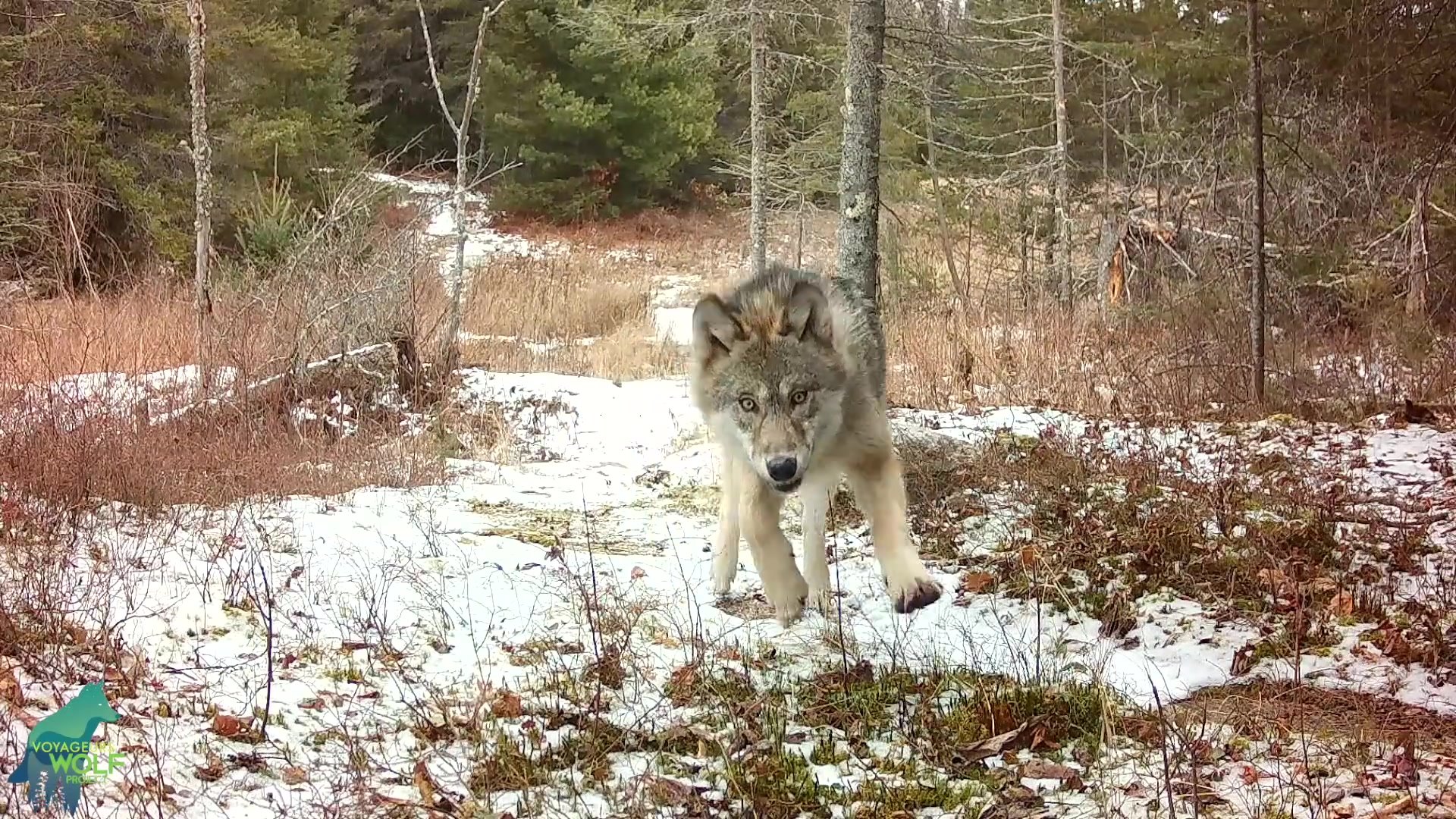
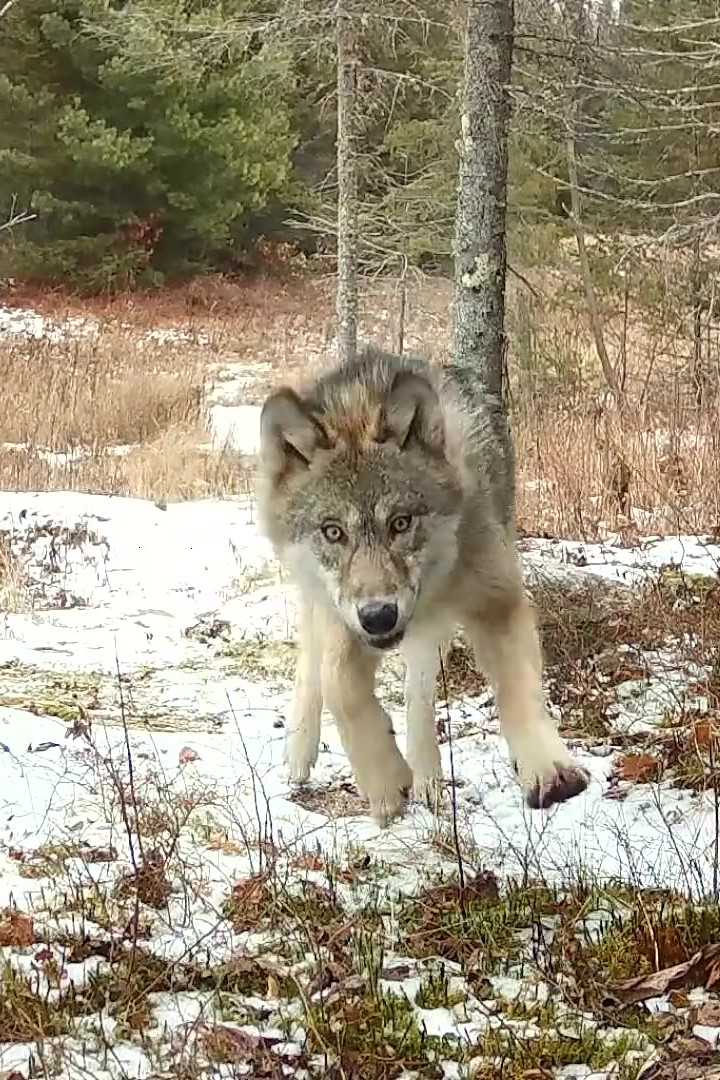
A gray wolf bounds over patchy snow straight at the lens, both front paws in the air and its amber eyes locked on the camera. Over the past few years, wolves in northern Minnesota have done this sort of thing to the Voyageurs Wolf Project's trail cameras several times, and the people who run them admit the reason is anyone's guess.
The footage strings together separate encounters, several of them in snow. Some wolves drop into a play bow. Some hop side to side and spring in place. Others walk right up and settle the question by nose, sniffing the camera up close.
The leaper at the lens is plainly a wolf. Its ears are short and rounded, not tall and pointed, the muzzle is broad and blocky, and the coat is buff-tan grizzled with gray and black. A coyote would carry pointed ears and a petite, pointed snout, and it would be roughly half the size.
 Save
The bows are the giveaway. A wolf that wants to play dances and bows playfully, and that is exactly the language on show here, offered to an object that never answers. Wolves are shy but very curious by nature, and these animals lean hard on the curious side. Play starts young. Pups stalk and pounce on each other and play with bones, feathers and animal skins, 'killing' them and carrying them around as trophies.
In the lower 48, wolves today hold mostly the forested lands of a few states, Minnesota among them. Here they usually live where roads are few, and they are federally listed as threatened. Packs are family groups: a breeding pair, their pups, perhaps last year's young. Pups grow fast: by freeze-up they are the size of small adults and can travel with their parents and other pack members. One gangly, long-legged wolf that bounces through has that half-grown look.
None of the cameras plays back.