The Story
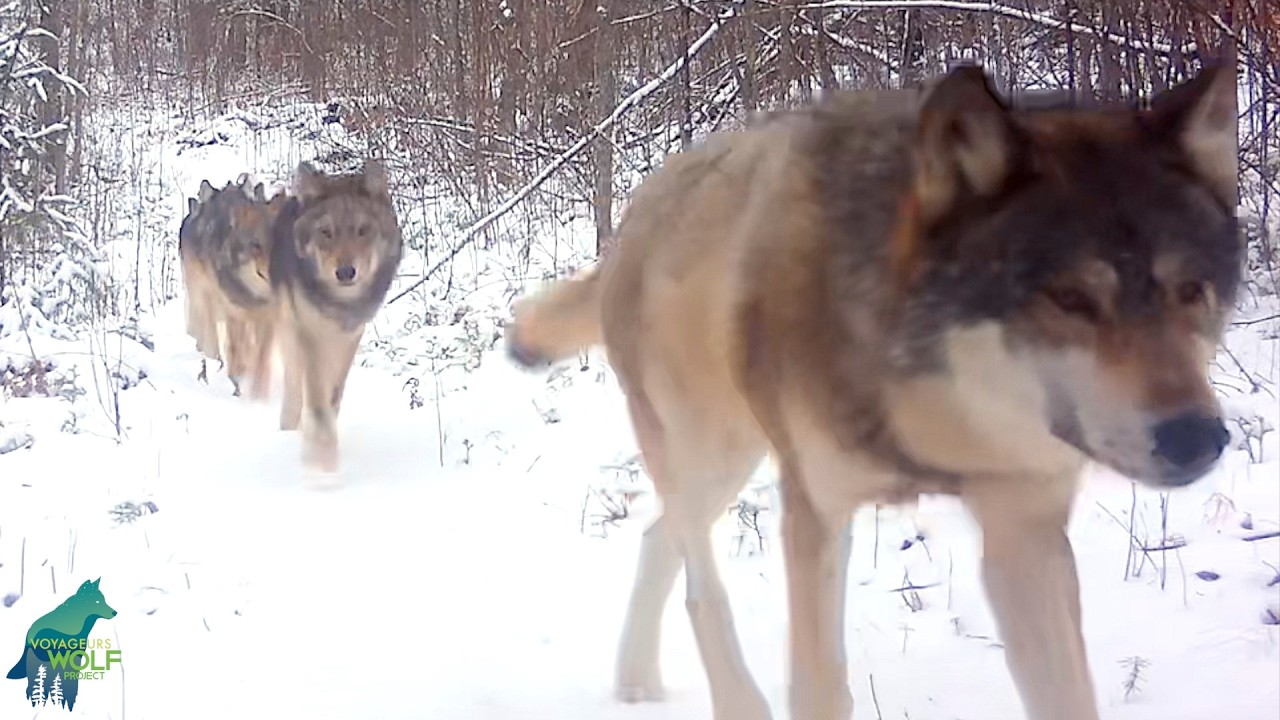
A gray wolf's face swings into the lens, near enough to block out the forest, short rounded ears up and a broad black-nosed muzzle going for the camera. Behind it, on a snowy trail in northern Minnesota, more wolves are coming.
This is the Blackstone Pack, the largest pack in the Greater Voyageurs Ecosystem in the winter of 2025-26, and the wolves do not simply walk by. They give the camera a few nibbles on their way past, a research camera inspected by the very animals it was put up to study.
Large has a yardstick here. Midwest packs average four to eight wolves in winter, with records of up to 16. A pack is a family: a breeding male and female, their pups, perhaps last year's young, and sometimes older wolves. In the Voyageurs area, pups have grown to the size of small adults by freeze-up and can travel with their parents, so a winter line may carry the year's litter among the adults.
The lead animal settles any coyote question in one frame. Its ears are short and rounded, not long and pointed, and its muzzle is large and blocky rather than petite. The coat is buff-tan grizzled with gray and black. Big feet work like snowshoes in snow like this, and hair between the toes keeps it from freezing there.
Wolves are shy but very curious by nature, though no source here explains a taste for camera housings. The footage shows the sequence plainly: a nose at the lens, a nibble, then the trail again.
Sleeping, resting and traveling fill most of a Minnesota wolf's fall and winter; feeding takes little of its time. A wolf trots at about 5 mph and may cover as far as 30 miles a day hunting. Around Voyageurs, frozen shorelines turn into wolf pathways once the ice sets. Midwest wolves live mainly on white-tailed deer. This pack found a camera instead and, judging by the tooth work, rated it a poor substitute.