The Story
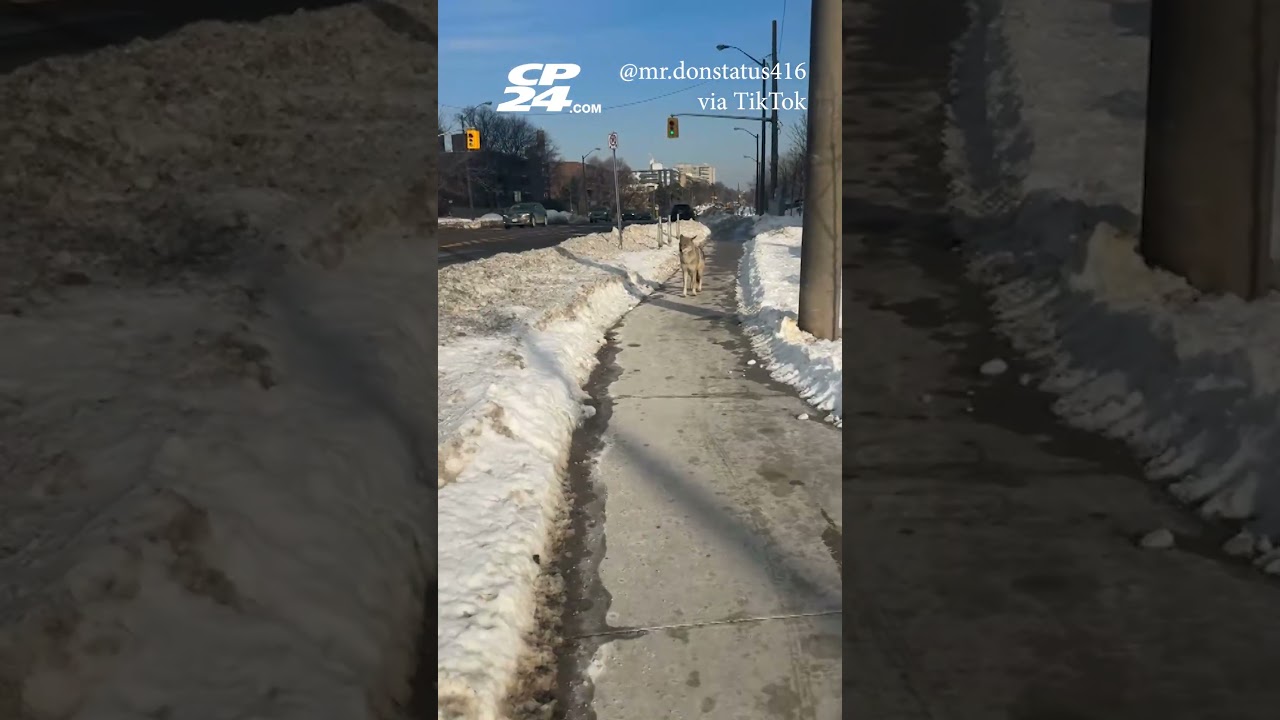
A coyote walks up a plowed Toronto sidewalk in bright winter sun, coming straight at the camera. Snowbanks wall in both sides, so the only open lane is the one the man filming it is on.
The spot is near York Mills and the Don Valley Parkway, with traffic lights overhead and cars on the road beside it. The coyote keeps to the cleared concrete, as anyone would after a snowfall. Coyotes live in forests, grasslands and swamps, but also in suburban and urban settings, and their trails often follow road edges. A plowed sidewalk beside traffic is that habit in its city form.
Broad daylight is the odd part. Coyotes are essentially nocturnal, though they may be seen moving about during the day. Winter is breeding season too, January to March, when coyotes are highly vocal again. Only one coyote is in view. In a Chicago-area study, one-third to one-half of the coyotes studied each year were solitary, travelling up to 60 square miles.
The man does what wildlife agencies advise. He shouts at it. Loud noise, waved sticks or a squirt from a hose are the recommended ways to haze a coyote that comes close, and the other rule is never to feed one, so it keeps its natural fear of people. In almost a third of recorded attacks on people, coyotes were known to be fed near the site. Attacks stay rare: 142 attack incidents (bites) across the US and Canada from 1985 to 2006.
When the coyote breaks away, it heads toward the road, a hazard of its own. In a Chicago-area study, vehicle collisions were the most common cause of death: 40 to 70% of deaths each year.
One field note for anyone sorting coyote from wolf or stray dog on a city street. A coyote is about one-third the size of a gray wolf, with large pointed ears and a pointed snout. It runs with its tail down, where a dog runs with its tail up and a wolf with its tail straight out.