The Story
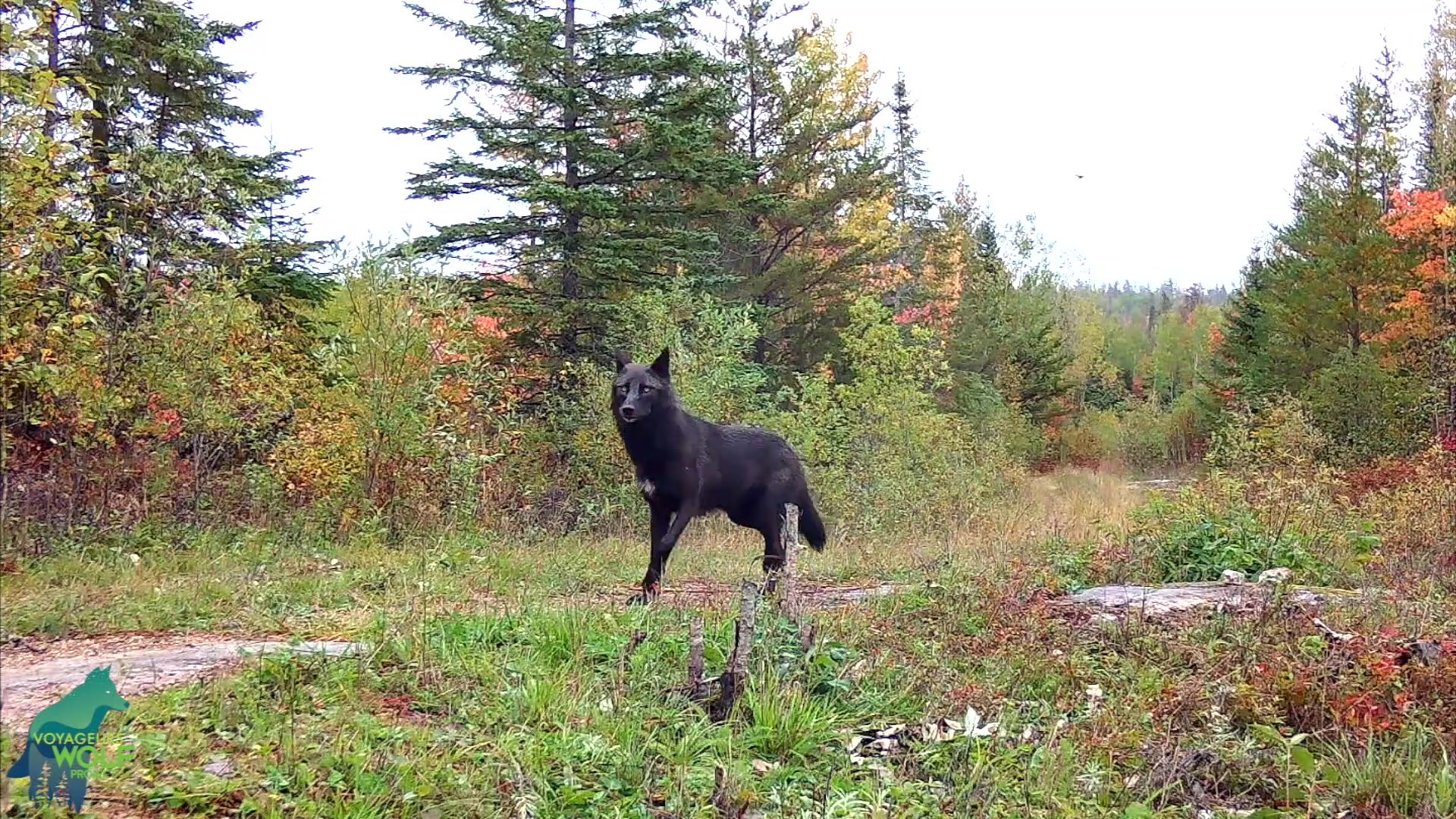
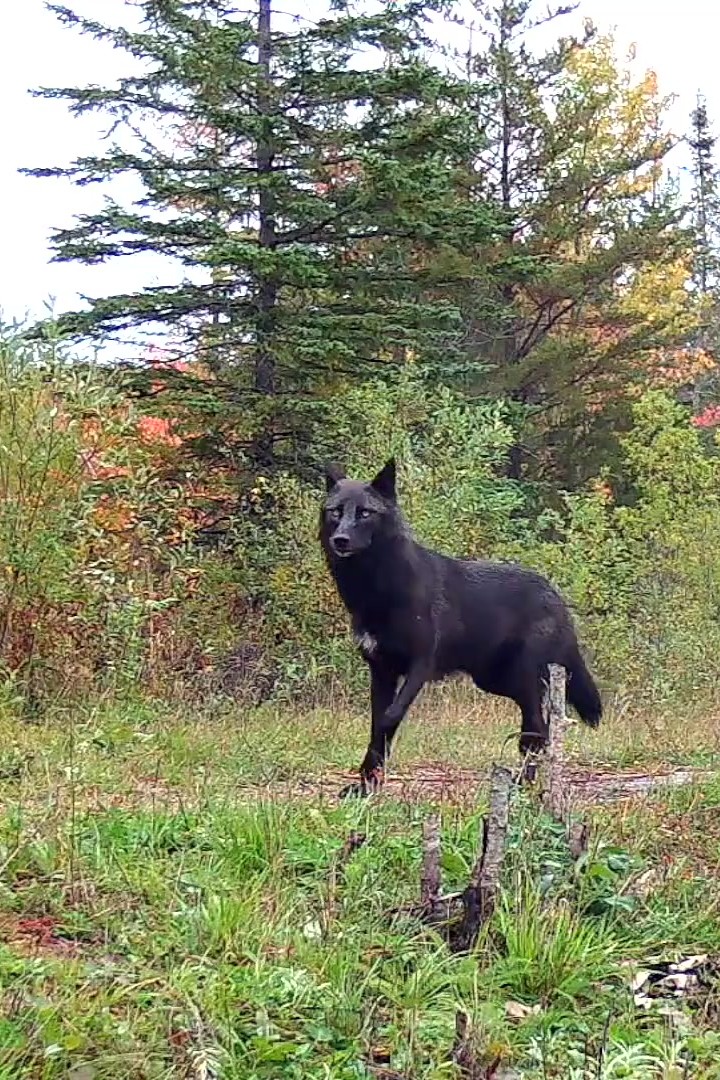
A gray wolf in a black coat stops in the open below red and yellow brush in northern Minnesota and holds still, ears pricked toward the trail camera, then turns and walks off along a grassy track. One small white blaze marks its chest, and the tail hangs straight down, the way a wolf carries it: straight out or down, never curled.
For the Voyageurs Wolf Project, whose camera this is, the moment is a first: their first daytime video of a black wolf. Black wolves are rare in their area. They have followed 10 to 11 packs a year for three years without finding a single black pack member, and the black wolves they have photographed in winter were all lone animals passing through. Elsewhere the color is no oddity. In Yellowstone, gray and black wolves turn up in roughly equal numbers.
Gray wolves usually travel at night, and their movements can cover long distances. No other wolf appears with this one. The camera sits in the territory of the Windsong Pack, whose three members are all the usual gray, so the researchers judge this wolf almost certainly a loner too.
 Save
Packs are family groups, a breeding male and female with their pups and perhaps last year's young, and they defend a territory by howling and by marking it with urine and scats, the signal that tells outside wolves an area is occupied. One Minnesota study measured territories of 195 to 555 square kilometers each, so a loner here is a stranger on claimed ground. This one does not linger. It turns its nose from the camera and walks off to the left along the track, tail hanging low behind it.