The Story
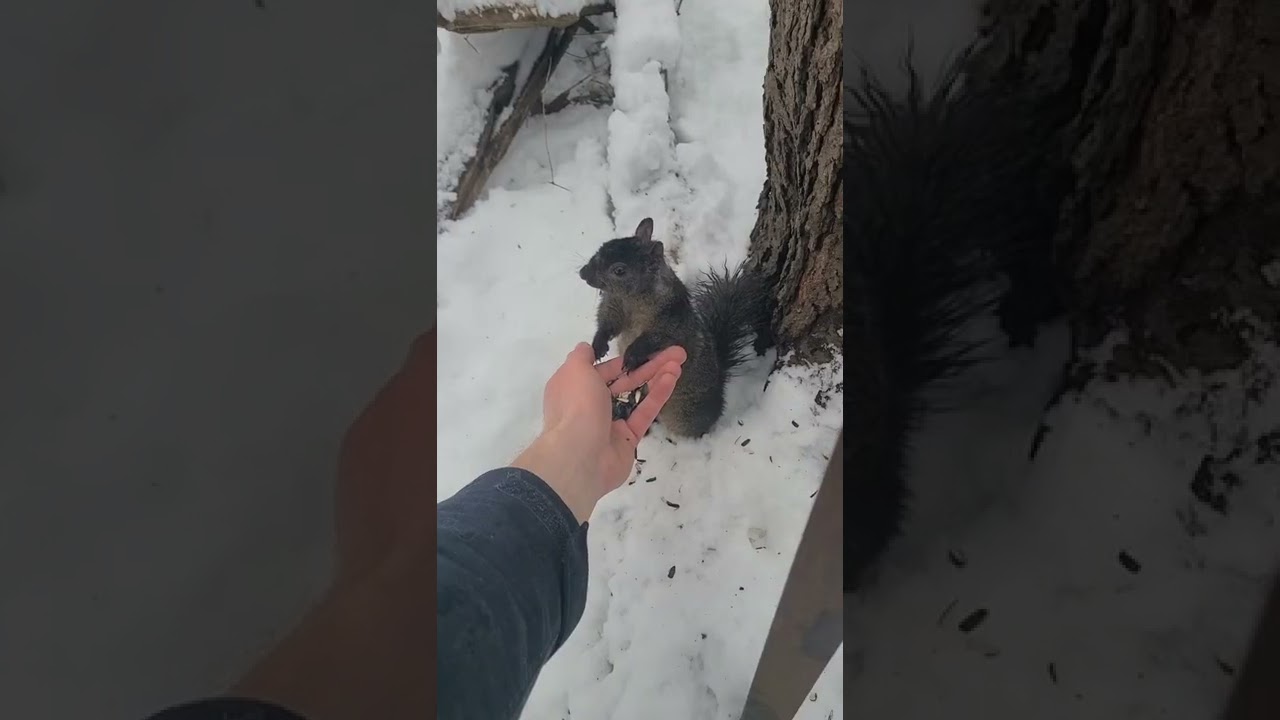
A black squirrel stands upright in trampled snow at the foot of a tree, both forepaws resting on an outstretched hand full of seeds. She is Little Bean, an eastern gray squirrel in its black form, and she did not always look this sleek.
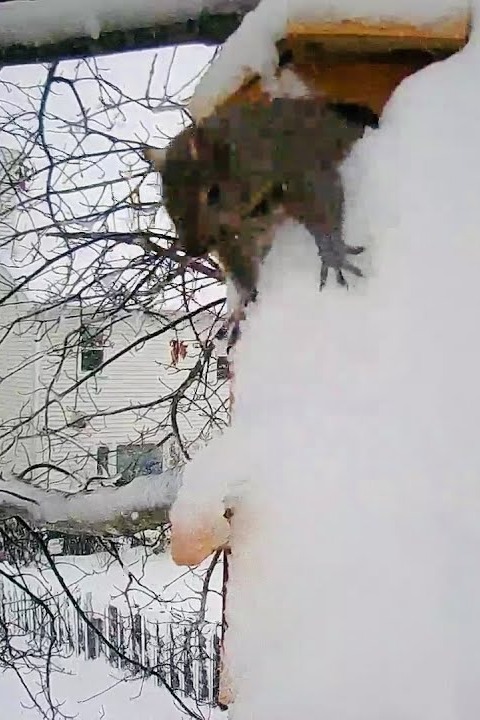
When the filmer first met her it was winter, and she was in trouble: cold, hungry, and losing fur to a skin condition in the woods where she lives. One day she jumped straight into his palm. He asked experts for advice, then carried her medicine into the forest, along with seeds coated in coconut oil and other snacks to help the coat come back.
Her color has its own story. Black squirrels are not a separate species; they are gray squirrels carrying extra pigment. Their incidence seems to be greater in the north, and studies cited by Animal Diversity Web found black squirrels have 18% lower heat loss below -10 degrees Celsius and a 20% lower basal metabolic rate than gray ones.
Winter offers no time off. Gray squirrels do not hibernate. They stay active all year, feed through rain and snow, and keep dry and warm under a tail arched over the back, a plume almost half the length of the body. Tree cavities are preferred homes, especially in winter, and large cavities are commonly filled with leaves in fall and spring for insulation.
Food is the other half of the bargain. Gray squirrels eat mostly nuts, seeds, buds, flowers, fruit and fungi, and a hard winter is decided early: in Ohio, winter survival is closely tied to the previous fall's mast crop. Here dark seeds lie scattered across the snow below the hand.
Months pass. Each time he returns to the woods she recognizes him and comes running, and the fur grows all the way back in. The squirrel who once landed in his hand now leans on it like a regular at the counter.