The Story
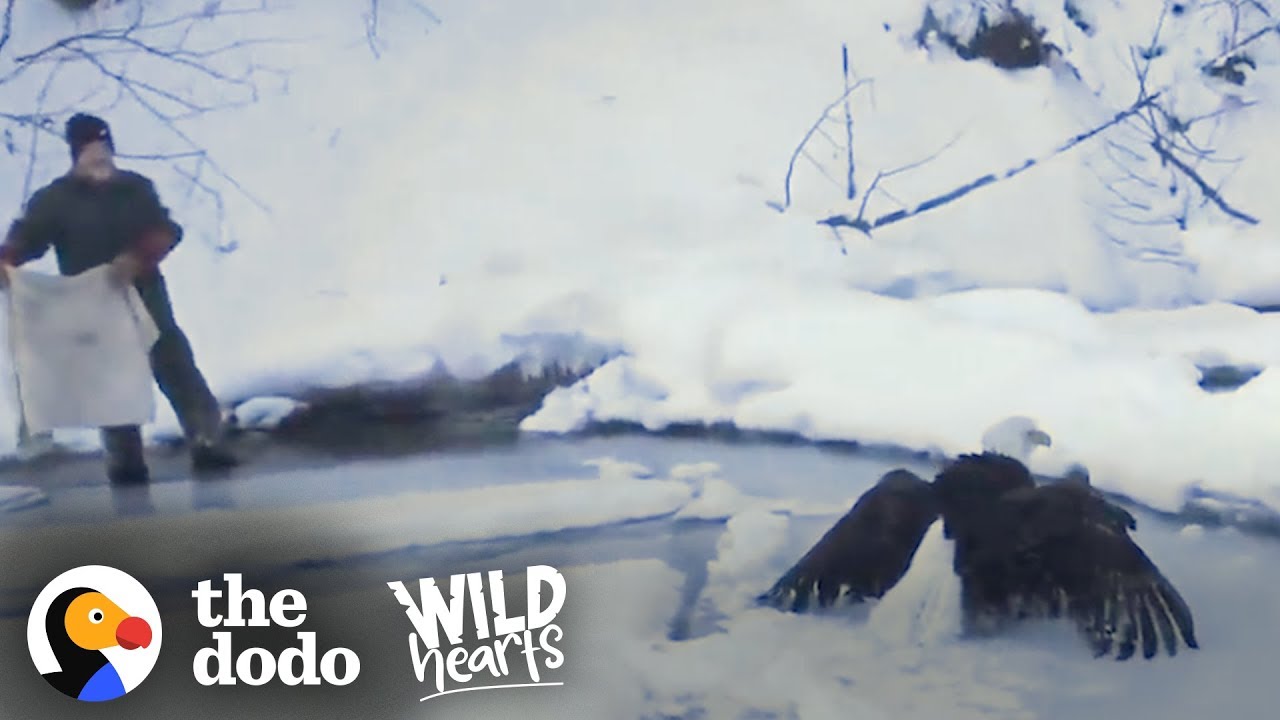
A bald eagle lies spread on the snow and ice of a frozen lake, wings flung wide, white head up, going nowhere. A ball of ice has frozen onto its tail and fixed it to the spot.
The bird is an adult, and the field marks settle that at a glance: snowy white head and tail on a dark brown body, a big yellow bill. No other eagle wears white at both ends. Today the white end at the back is the trouble, a fan of tail feathers sealed into a lump of ice.
Winter ice is familiar footing for this species. When lakes lock up, bald eagles go where water stays open, below dams and power plants, and they perch on the ice shelves along rivers. Fish are the staple of the diet, so the margin between ice and water is a working spot. It can also be a trap.
This one is found in time. Rescuers take the eagle in hand, a real armful for a bird that weighs 3 to 6.5 kg, and the thaw begins. Warm water goes over the frozen tail until the ice lets go.
Through all of it the eagle stays calm. No snapping, no thrashing. Laid down with its legs held apart and its tail in warm water, it has the look of a raptor enduring a bath it never agreed to, and it puts up with every minute.
Then the release, in the snow, in front of a crowd that has turned out to see it go. The eagle beats up and away on wings that can span 178 to 229 cm, passes a power line, and clears it. A bird that was cemented to a lake is airborne again.