The Story
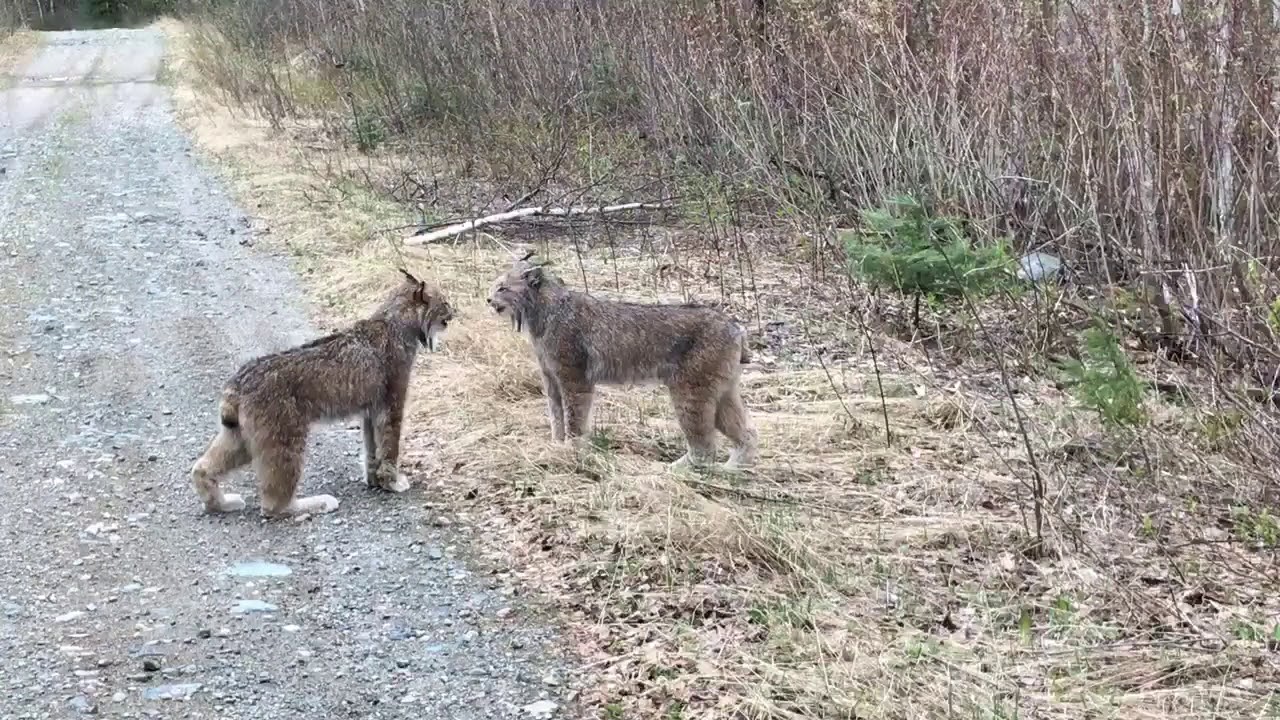
Two Canada lynx stand face to face on the shoulder of a gravel road in Ontario, ear tufts up, mouths open, yowling straight at each other. Neither one throws a paw.
A driver came on them on May 18 near Avery Lake, close to the Dinorwic area. One lynx holds the gravel, the other the dry grass verge, against a wall of leafless brush. To the filmer it looked like a territorial dispute.
Two of them standing this close is the strange part. Lynx are solitary, and adults typically avoid each other except during the winter breeding season. Panthera's assessment of this very standoff is that it was likely a mating-season face-off, a ritualized way to avoid a real fight. The date adds a wrinkle: in Alaska, mating runs in March and early April, so mid-May is late on that calendar, and the territorial read stays open.
The noise is the shock. Lynx make sounds a house cat would recognize: mews, yowls, spits and hisses, and they yowl and growl most during the breeding season. Here the yowls rise and fall in long trades, as if two outsized alley cats had borrowed a back fence in the bush. The pair edge closer and lower their heads almost in step, then pull up short. No blow lands.
For anyone sorting lynx from bobcat, four field marks settle it. The black ear tufts run much longer than a bobcat's. The paws are exceptionally large and furry, built to work as snowshoes for winter hunting and travel. The hind legs look longer than the front. The short tail is black all the way around the tip, as if dipped in ink, where a bobcat's tip is black only on top.
The setting fits. Lynx are very common around Dinorwic, and in Ontario they live throughout the boreal forest, generally north of Algonquin Provincial Park. Their fortunes come down mostly to one prey animal, the snowshoe hare, whose abundance is the major limiting factor for lynx.