The Story
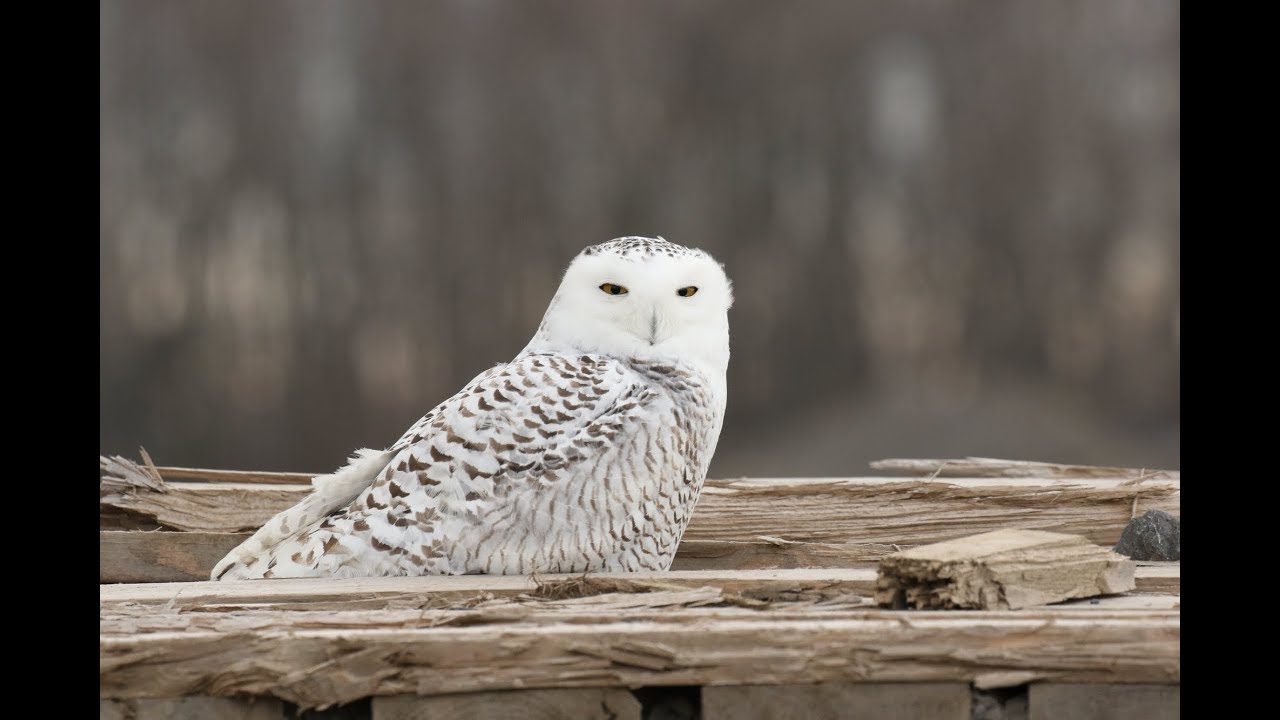
A snowy owl sits low on a heap of splintered boards, its barred body side-on to the lens and its round white head turned to meet the camera with level yellow eyes. It is one owl among dozens.
The film is billed as 20 snowy owls in two days, and that undersells the trip. On a single day of it, at a favorite snowy owl haunt, the filmer counted 32 different birds. She filmed as many as she could, in varied settings and perches.
Two of them arrive late and stay together the entire day, a side-by-side pairing the filmer waited nine years to see. The larger bird, with black barring across her feathers, is the female. The male is smaller and whiter. That is the textbook split. Females outsize males, adult females retain some darker markings and males have the least, though it takes a male several years to turn totally white.
Snowy owls are generally solitary and territorial, and in winter females set up territories they defend until spring. So this crowding has edges. Three owls roost close together. A female holds the top of one tree while a male perches below her, a choice the filmer calls brave. Elsewhere two males share a tree, and the one on the right opens his bill to call. Males hoot more often than females and seem to use the hoot to claim and defend territory.
Between the calls there is upkeep and work. One male breaks off a branch to clean his beak. Others preen. On snow-covered ground a female hunts her field. Snowy owls usually hunt from a perch, then chase prey in swift flight and take it in their talons, and they can pinpoint rodents moving under snow by ear.
One spot is private land, filmed from a friend's truck with the owners' permission. Elsewhere the noise of Canada geese carries in, and the owls seem to wonder what it is. It is the geese who should be uneasy. Snowy owls take birds as big as geese.