The Story
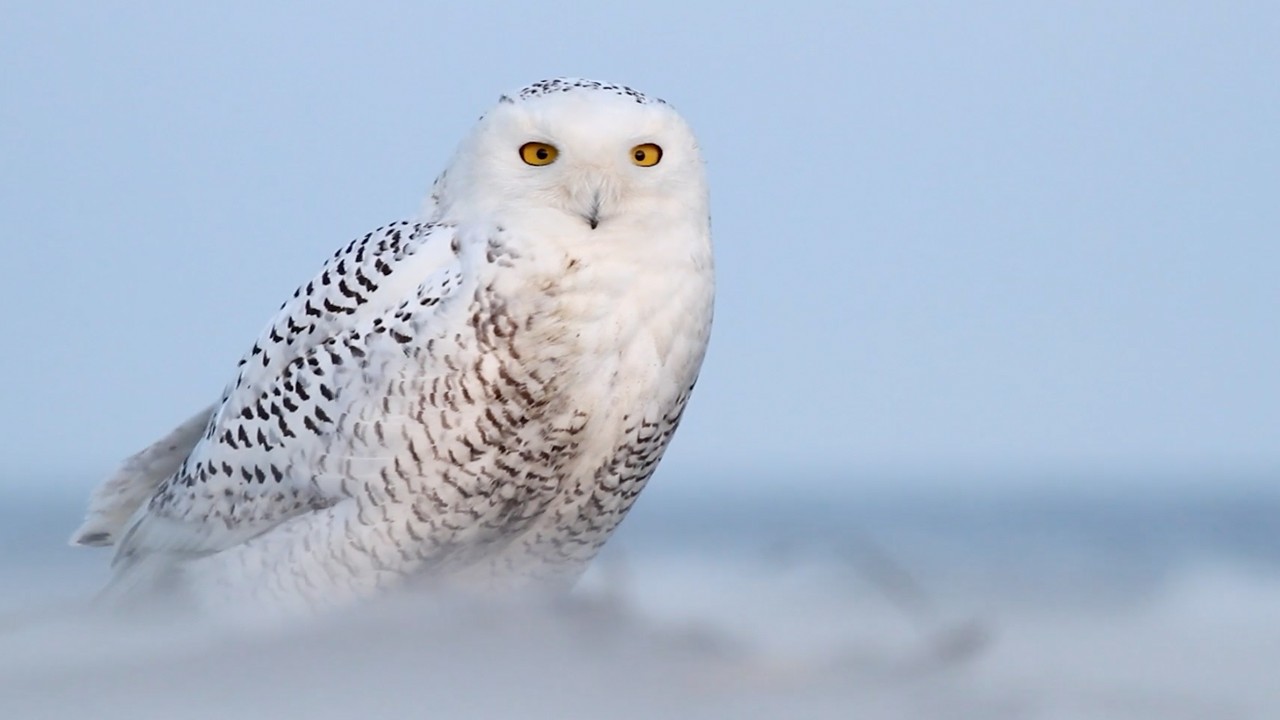
Round head, black beak, two yellow eyes set dead level: a snowy owl sits low on the snow and holds the camera in a flat, level stare.
Look past the face and the bird is far from all white. Rows of dark bars run across its wing and breast, and the crown is flecked. That pattern is the first clue to who is sitting there. Old males go almost pure white, and a male needs several years to get there. Young females are heavily marked, adult females keep some darker markings, and juveniles tend to carry the most black of all. A bird this barred is no old male. The frame does not settle the rest.
The footage is a short introduction to the species, covering identification, food, nesting and range, and it gives no place or date for this particular owl. Snow and open ground are what the shot offers, so the story stays with the species.
Snowy owls breed on Arctic tundra in Alaska and northern Canada and winter across Canada and the northern US. About every four years, many push south in an irruption. Those birds are mostly healthy young owls from a big Arctic breeding year fueled by lemmings, not starving ones. In 2013-2014 they reached Florida and Bermuda. Winter puts them on prairies, farmland, coastal marshes, beaches and large airports. In northern Minnesota they are sometimes seen hunting in railroad yards and other city areas.
A snowy owl usually watches from a perch, then chases prey down in swift flight and takes it in its talons. It can find rodents moving under snow by hearing, and one owl may eat more than 1,600 lemmings in a year. The feet are feathered white, more densely than in owls of warmer climates.
Owl experts give a simple rule. If an owl stares at you, bobs its head repeatedly or otherwise responds to you, you are too close. This one stares straight down the lens; the frame cannot say from how far.