The Story
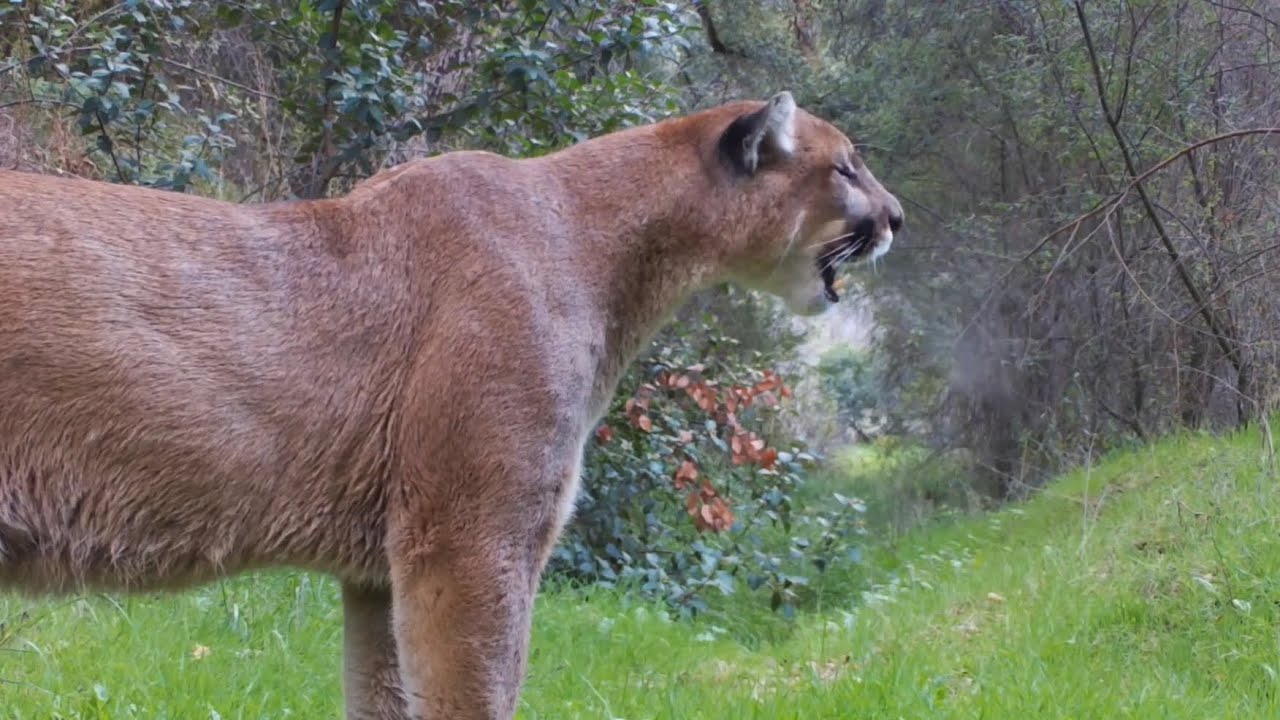
Five hours separate this cougar from the other male that stood on this patch of grass. It plants itself side-on in a green canyon in the Angeles National Forest, takes a look at the camera, opens its mouth and screams.
The date is December 7, 2022, and the cat is on patrol, which is how the filmer describes the visit. At this range it fills the frame. The marks are all there: an unspotted tan coat, black on the back of the ear, black down the side of the muzzle, a white chin. The eyes narrow almost shut and the neck stretches forward as the call comes.
What comes out is high and raw, more shriek than growl. Cougars cannot roar. Their repertoire runs to hisses, purrs, mews, growls, yowls, chirps and cries, and the eerie wails heard at night in mating season have been likened to a woman's scream. Those wails are heard at night. This one arrives in daylight, more than once, with the source standing in plain view. A cougar is most active from dusk to dawn but may hunt at any time of day, so a cat on its feet in daylight is no great surprise.
The filmer reads the call as most likely a message for that other male. The idea has a footing in how cougars live. Cougars are solitary, and males hold territories of up to 500 square miles that they defend from other males. They mark that ground with claw marks on trees and with mounds scented with urine. Whether a scream does the same job is more than one clip can prove, and nothing in the frame settles it.
Then comes the timing. Twenty minutes after this, the other male returns to the very same spot. On ground that can run to 500 square miles, twenty minutes is practically a shared doorstep. Where the screamer had gone by then, the filmer does not say.