The Story
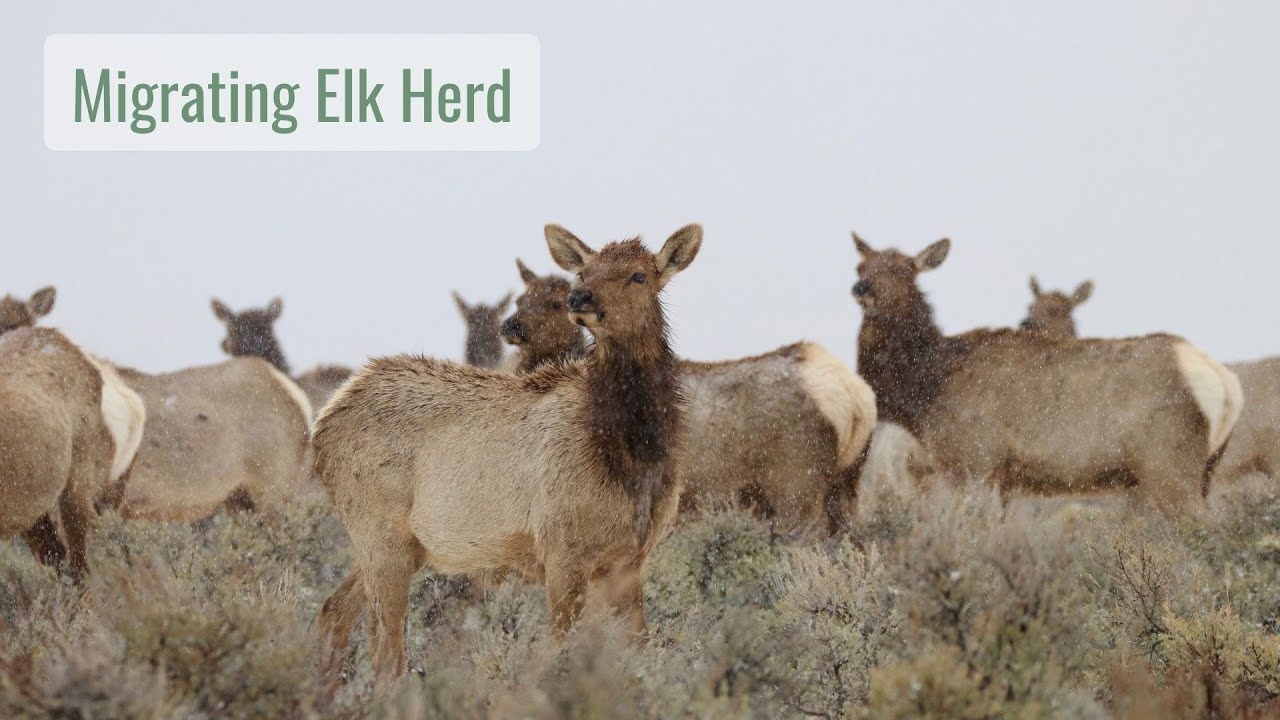
A young elk stands in sagebrush, ears up, flakes collecting on its shaggy coat, while a Wyoming herd of several hundred moves behind it. The snow falls so thick that the far animals blur into gray shapes.
The herd is mostly cows and last year's calves, the yearlings now nearly as big as their mothers. Their winter coats look ragged. The bodies are light brown, the heads and necks darker, and each rump carries a buff patch. That coat is built for weather like this, its hollow hairs holding air as insulation.
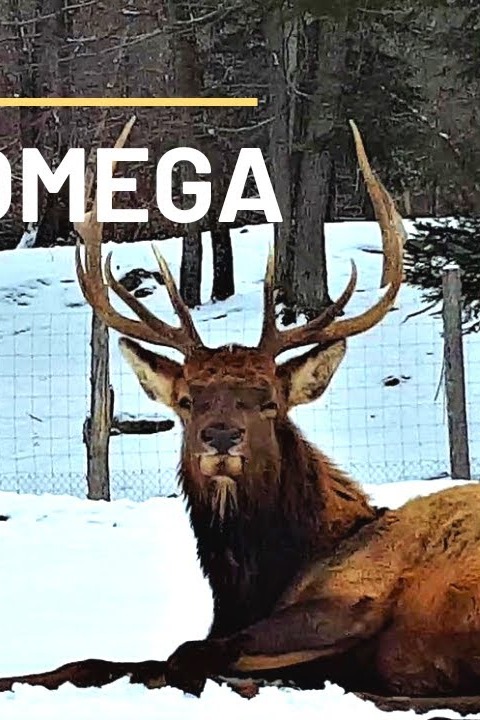
Antlers are scarce, and the calendar explains it. Bulls grow them, cows only very occasionally, and the biggest bulls start dropping theirs in late February. Younger bulls can hold on until April or early May. So the antlered heads in this crowd are mostly spike bulls, plus only one larger bull still wearing his rack.
Nothing here is hurried. The herd moves a little, stops to browse, beds down, then moves again, working toward higher summer ground as the snow pulls back, a melt running about a month early this year. Many herds make the same seasonal shift, climbing for summer and coming down in winter, in western Montana usually to grass or shrub ranges with nearby trees for cover, though some populations do not migrate. Come summer, herds can hold up to 400 elk, and old cows usually lead them.
The footage comes from a car parked at the roadside, and the elk pay it little mind. The wind outside is strong enough to rock the car.
The best detail is the easiest to miss. Behind the herd, a moose walks through toward the tree line, and it went unnoticed until the edit. Several hundred elk in front, and the one animal of a different kind slips past at the back.