My Crittercam
My Crittercam › Cougar

Cougar charges downhill to guard its kill

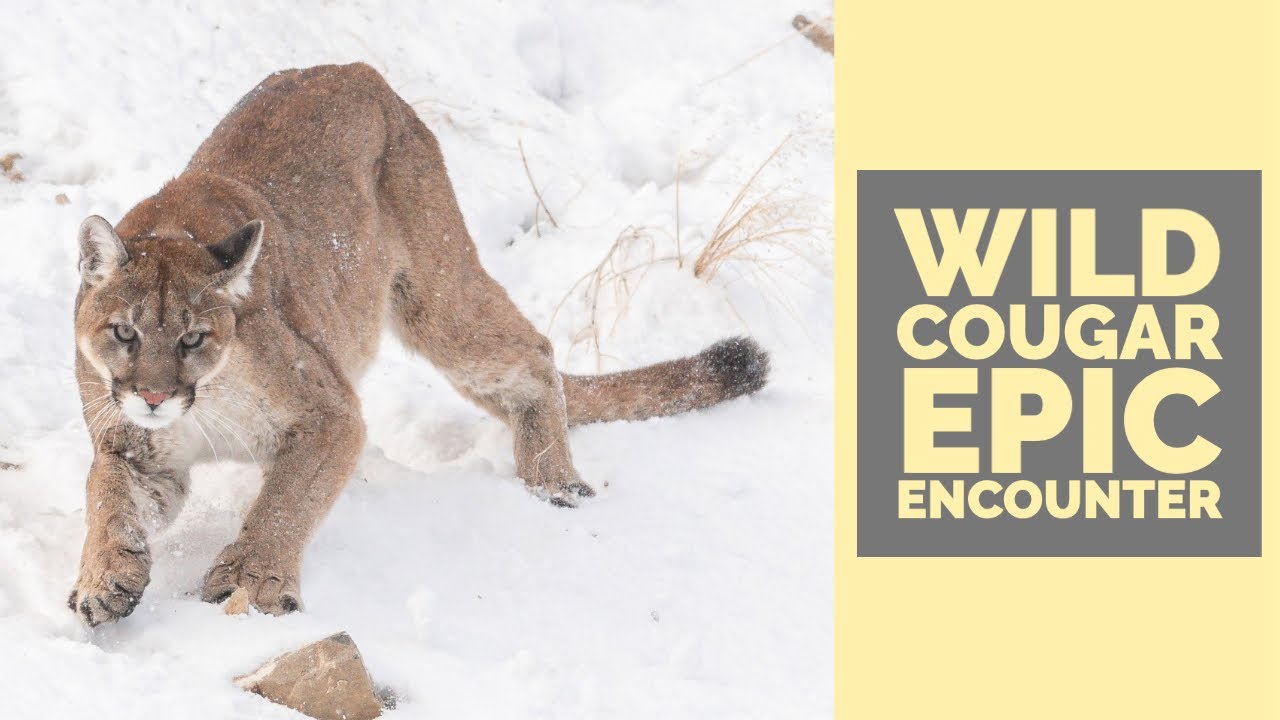
A tan cougar crouches low in the snow and steps straight toward the camera, eyes on the lens and one forepaw reaching forward, with a rock in the foreground.

Footage: Steve Mattheis · 14:14 · uploaded February 4, 2020
Written by My Crittercam · published November 6, 2026

The Story

A cougar comes down a snowy hillside at a run, head low, eyes locked forward, snow and rock kicking off its paws. It is a wild mountain lion in the town of Jackson, Wyoming, and it has a quarrel with some birds.

The quarrel sits at the bottom of the slope. The cat has killed what looks like a mule deer beside a gas station, and daylight apparently caught it before the carcass was buried. Birds found the meat. The lion has pulled back uphill to a tree, and three times between 1:30 and 4 in the afternoon it charges down to drive them off, straight toward the long lenses.

That charge runs against the usual script. Cougars are most active from dusk to dawn, and they hunt by ambush, stalking under cover to 30 feet or less before leaping onto the prey's back with a neck bite. The normal follow-up is quiet: drag the kill to cover, often cover it over, and come back to feed.

Over the next four days this one goes back to the quiet version. It covers the carcass with more care, stays up in the trees by day and comes down after dark to eat, lit by the gas station, a billboard and traffic lights. Around a hundred photographers stand in the cold hoping for a repeat. It never comes.

The patience is in the species. A cougar may guard a cached kill against scavengers and feed on it over six to eight days, and a large Cascade male kills a deer or elk only every 9 to 12 days, eating up to 20 pounds at a time. Deer are the preferred prey.

Frames from that first afternoon show the field marks plainly: an unspotted tan-brown coat, a white chin and throat, a pinkish nose, dark backs to the ears, and a long heavy tail ending in black. For an animal that leans on rock, brush and forest to stay hidden, it picked a very public place to lose its temper.
Field Guide

In the town of Jackson, Wyoming, a cougar charges down a snowy slope three times in one afternoon to chase birds off a kill it had not yet buried. Full field guide for the Cougar

Common nameCougar
Scientific namePuma concolor
FamilyFelidae (cats)
SizeMales 7-8 ft long nose to tail tip, up to 30 in at the shoulder; females 5-7 ft; tail about one-third of total lengthCalifornia Department of Fish and Wildlife · Animal Diversity Web, University of Michigan
WeightWashington adult males average about 140 lb, rarely 180 lb; females rarely exceed 110 lbWashington Department of Fish and Wildlife
DietCarnivore; deer are the preferred and most common prey, plus elk, moose, mountain goats and wild sheep; other prey, especially for younger cougars, includes raccoons, coyotes and rabbitsWashington Department of Fish and Wildlife · Animal Diversity Web, University of Michigan
Active whenMost active dusk to dawn, but may hunt at any time of dayWashington Department of Fish and Wildlife
RangeCanada south to South America, now mainly in mountainous, relatively unpopulated areas; eastern North American populations exterminated except Florida panthers; wanderers confirmed in MissouriNatureServe Explorer · Animal Diversity Web, University of Michigan · Missouri Department of Conservation
LifespanAbout 10-13 years (NPS); up to 18 to 20 years in the wild (ADW)National Park Service · Animal Diversity Web, University of Michigan
Conservation statusIUCN Red List: Least Concern; NatureServe global rank G5; Florida panther (P. c. coryi) listed Endangered by USFWS under the US Endangered Species ActAnimal Diversity Web, University of Michigan · NatureServe Explorer
Cam notes · Cameratelephoto camera (600mm lens), stills and video
Cam notes · Time of dayafternoon, later after dark
Cam notes · Seasonwinter, January snow
Cam notes · Placethe town of Jackson, Wyoming

Habitat

Behavior

Questions

Why is a mountain lion so hard to see in the wild?

Cougars are solitary and elusive, and most active from dusk to dawn. GPS data from the Santa Monica Mountains show they prefer natural areas and attempt to avoid contact with humans.California Department of Fish and Wildlife · Washington Department of Fish and Wildlife · National Park Service

What should I do if I meet a mountain lion?

Stop, pick up small children, do not run, face it and appear larger while backing away. If it attacks, fight back and try to stay on your feet.Washington Department of Fish and Wildlife

Why does a cougar bury its kill?

It often covers the carcass with snow, grass, leaves, sticks or soil; covering hides it from scavengers. It may stay near the kill and feed on it over six to eight days, so never linger near a covered carcass.Washington Department of Fish and Wildlife · California Department of Fish and Wildlife

Latest clips