The Story
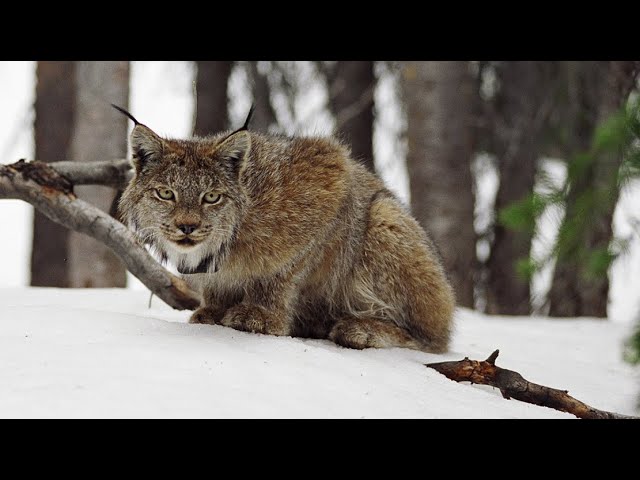
A Canada lynx crouches in the snow beside a fallen branch, paws drawn under its chest, black ear tufts up, and holds the lens with a flat, pale stare. Colorado once lost this cat entirely.
The film behind the frame, from Colorado Parks and Wildlife's mammals research section, is about putting lynx back in the state's high-elevation forests. Nobody knows for certain what drove them out, though trapping for a valuable pelt, the mining boom and old clear-cuts are all suspects.
The project was underway by 1997, working with British Columbia and Alaska for lynx and with no earlier success anywhere to copy. At the first release the door opens, a lynx takes a tentative step, looks around and trots off. Within about three weeks came the first starvation. The animals had arrived in marginal condition, so the program began holding each for at least three weeks and feeding it well. The starvations stopped, and in 2010 the reintroduction phase was declared complete.
Keeping them is a hare problem. Colorado research puts snowshoe hares at about three quarters of what these lynx eat, inside the 35 to 99 percent of prey biomass recorded for the species. When hares run short, kitten deaths rise and pregnancy rates fall.
So the biologists read a forest the way a hare would: dense horizontal cover from about two meters down, young conifers that hide a hare and whose needles feed it all winter. Crews track hare numbers by counting pellets at staked random plots, and a biologist's daughter of about six, taking the plot maps for connect-the-dots puzzles, hit on a good way to order the routes.
The cat in the frame wears full winter kit. Its ear tufts are long and black, much longer than a bobcat's, and long neck hair frames a pronounced goatee. Tucked beneath it are the large, furry paws that work as snowshoes in deep powder, likely a seasonal edge over other terrestrial hare predators.