The Story
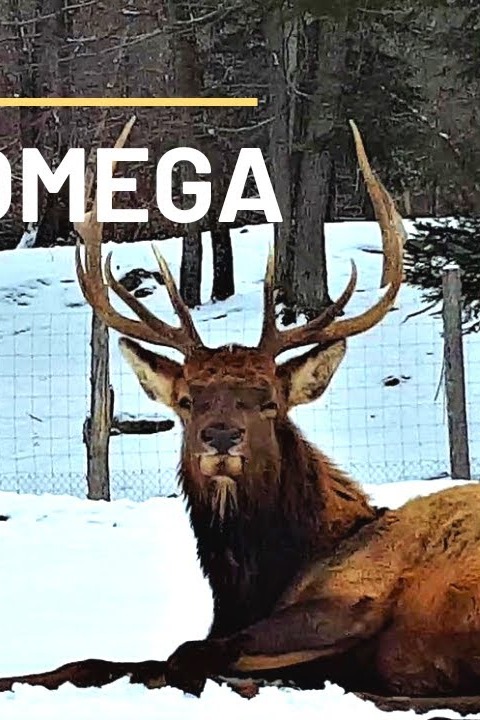
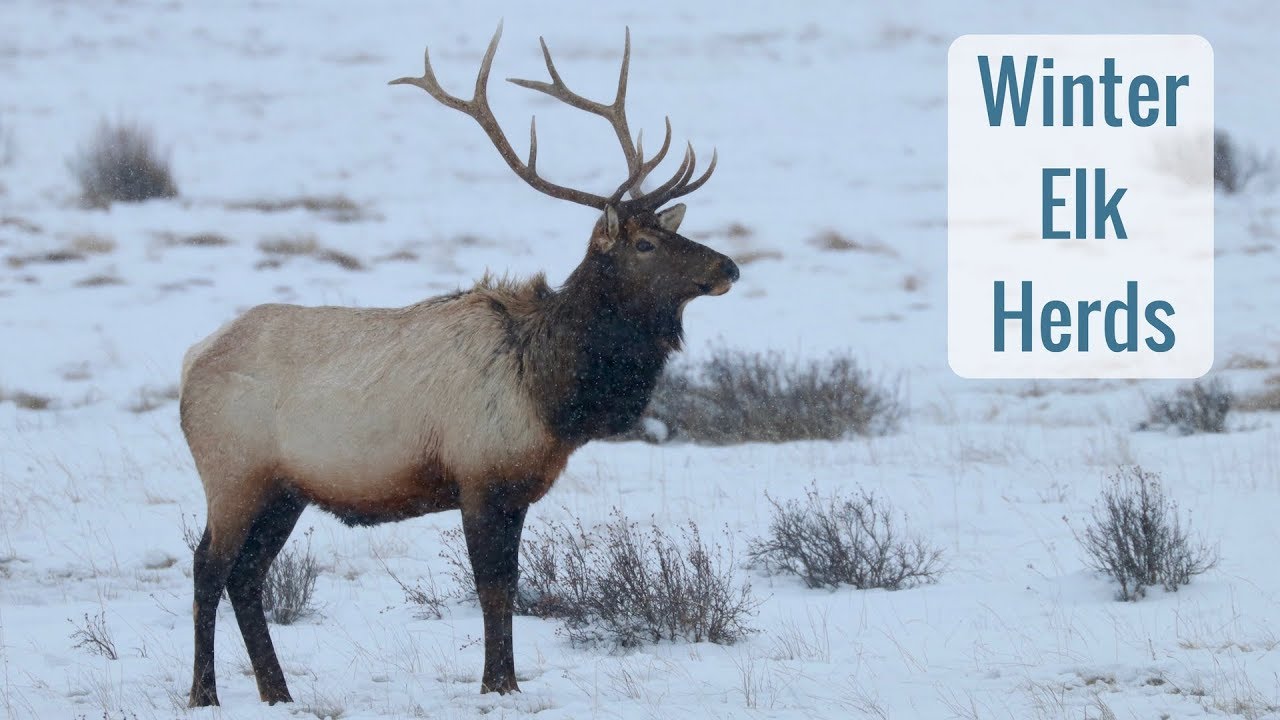
Snow is falling on open Wyoming ground, and a bull elk stands broadside in it, head up, antlers rising well above his ears. Flakes settle in the dark hair of his neck.
The clip is a winter look at several elk herds, filmed over a few weeks as they browse for whatever grass is still to be had. In this frame the bull stands alone, low gray shrubs breaking the white around his legs.
The field marks read straight out of a guide. His body is pale, the light brown of a winter coat, while the head, neck and legs run darker. Both sexes have a dark brown mane; in winter it hangs shaggy from neck to chest, and it grows longer on a bull than on a cow. Antlers grow on bulls, very occasionally on cows, and a mature bull's generally carry five tines off the main branch, for a total of six points.
Winter changes the menu. Elk prefer grass where they can get it, and these herds are browsing open ground for what is left. In winter they also browse shrubs, aspen bark and conifers, but conifers are a last resort, eaten when snow covers other plants. In western Montana elk usually move down to grass or shrub winter ranges with nearby trees for cover, while some populations never migrate.
The coat earns its keep here. It is built of hollow hairs that trap air for insulation, and an elk can plow through deep snow when it has to.
The rack itself is on a deadline. The largest bulls start dropping their antlers in late February, and the next set grows under velvet through spring and summer, as much as an inch a day. A mature bull's antlers can weigh up to 40 pounds. This bull holds his head high under his, snow and all.